.webp)
How to Choose Your IVF Clinic: Criteria That Matter Beyond Success Rates
Choosing a fertility clinic is one of the most significant decisions you will make in this process. It shapes not just your treatment plan, but your experience — how supported you feel, how clearly you understand what is happening, and ultimately what outcomes become possible for you.
Most people start with success rates. That is a reasonable instinct, but it is also an incomplete one. Published success rates are worth reviewing, but they tell only part of the story — and understanding what else to evaluate gives you a much more reliable basis for choosing where to pursue care.
This guide walks through the criteria that experienced fertility patients and clinicians consistently point to as most meaningful when choosing a clinic in San Diego or anywhere else.
Understanding Success Rate Data — and Its Limits
Fertility clinic success rates in the U.S. are reported to SART (Society for Assisted Reproductive Technology) and published annually. These figures show live birth rates per retrieval cycle or per embryo transfer, broken down by age group. They are a meaningful data point — but they require context to interpret correctly.
One critical issue is patient mix. A clinic that accepts primarily younger patients with straightforward diagnoses will naturally report higher success rates than a clinic that specializes in complex cases — diminished ovarian reserve, failed IVF, advanced maternal age. This does not mean the complex-case clinic is performing worse. It means it is seeing harder cases.
Hanabusa IVF's clinical focus includes many of the most complex fertility presentations: diminished ovarian reserve, premature ovarian insufficiency, recurrent pregnancy loss, and patients who have failed IVF elsewhere. A clinic's willingness to work with these patients — and its track record in doing so — says something important about the quality and depth of its clinical approach.
Lab Quality and Accreditation
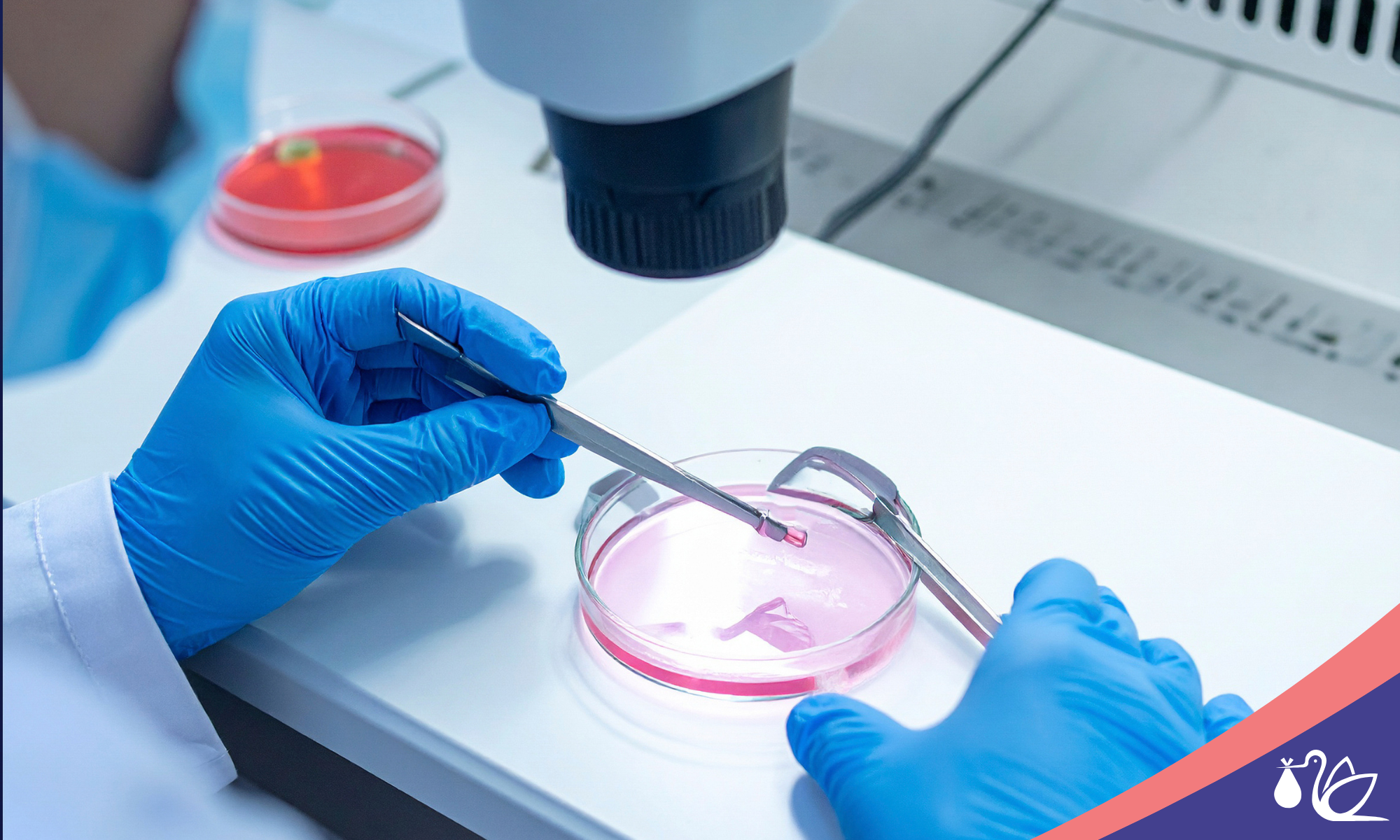
The embryology lab is the heart of any IVF program. It is where fertilization occurs, where embryos are cultured for five or six days, and where successful vitrification (freezing) determines whether your embryos survive thawing intact.
When evaluating clinics, ask specifically about lab accreditation and certification. Look for:
- CAP accreditation (College of American Pathologists) — a rigorous laboratory certification standard
- ABB certification (American Association of Bioanalysts) — specific to reproductive laboratories
- FDA and CDC registration — required for labs handling reproductive tissue
- Vitrification survival rates — what percentage of frozen embryos survive thaw intact? This directly affects your frozen transfer outcomes.
Hanabusa IVF holds CAP, ABB, FDA, and CDC accreditation, and has more than a decade of vitrification expertise. The clinic also serves as the dedicated laboratory for Asian Egg Bank — a reflection of sustained, independently verified lab excellence.
"Patients sometimes focus heavily on what happens at the retrieval procedure and less on what happens after. But the embryology lab is where outcomes are made or lost — in the culture conditions, the timing of decisions, the quality of the freeze. These are the things that separate good programs from excellent ones."
— Dr. Lyndon Chang, Medical Director at Hanabusa IVF
The Individualization of Your Treatment Protocol
One of the most revealing questions you can ask any fertility clinic is this: How do you decide on a stimulation protocol for each patient?
A clinic that gives a generic answer — "we use a standard protocol" or "we start everyone the same way" — is telling you something important about their approach. A clinic with a genuinely individualized model will walk you through the factors they consider: your AMH level, your antral follicle count, your FSH, your history, your goals.
Hanabusa IVF's core philosophy is "one size doesn't fit all." That is not a marketing slogan — it is a clinical commitment that shows up in how every protocol is designed. Patients with diminished reserve, older patients, patients who have failed elsewhere — all receive protocols built specifically around their biology, not a default starting point that gets adjusted after the fact.
"What I want patients to understand is that the protocol is not a formality. It is a clinical decision with real consequences for what you retrieve and how your embryos develop. Choosing a clinic that takes that decision seriously — and explains its reasoning — is one of the most important things you can do."
— Dr. Diana LeBlanc, a Fertility Specialist at Hanabusa IVF
The Quality of Communication and Transparency
Fertility treatment is emotionally demanding. The clinic you choose will be guiding you through some of the most difficult moments of this process — a negative result, a cancelled cycle, an unexpected finding. How your care team communicates during those moments matters enormously.
In your initial consultation, notice whether the physician takes time to explain their reasoning, whether they answer your questions directly rather than deflecting, and whether they present realistic expectations rather than optimistic projections designed to make you feel good about proceeding.
Transparency about success rates — including for patients in your specific situation, not just population-level averages — is a meaningful indicator of a clinic's honesty. A physician who is willing to tell you honestly when the odds are challenging is more trustworthy than one who always finds a reason to proceed.
Experience With Complex and Difficult Cases
If you are pursuing IVF after a previous failure, after being told your prognosis is poor, or with a diagnosis that complicates your path — the clinic's experience with complex cases is directly relevant to your care.
Ask specifically: What is your experience with patients who have diminished ovarian reserve? With patients who have failed IVF at other clinics? With patients over 40 or 42 using their own eggs? The answers reveal not just whether the clinic has seen your situation before, but how they think about it.
Hanabusa IVF was built around complex fertility care. The clinic sees patients at all stages — including those just beginning their journey — but has a specific depth of experience with the most difficult presentations. That depth reflects in the clinical decisions made for each patient, not just in a marketing claim.
How the Clinic Handles Failed Cycles
How a clinic responds to a failed cycle tells you a great deal about how they will serve you if things do not go as planned the first time. Do they conduct a thorough review of what happened? Do they adjust the protocol for the next attempt based on specific findings? Or do they suggest repeating the same approach?
A clinic that reviews cycle outcomes carefully — adjusting stimulation, timing, lab conditions, or transfer protocols based on what the data showed — demonstrates both clinical rigor and genuine investment in the patient's outcome. This is what thoughtful, individualized care looks like in practice.
Frequently Asked Questions
How do I compare IVF success rates between clinics in San Diego?
Review published SART data with awareness of patient mix. A clinic specializing in complex cases may report lower average success rates while actually delivering excellent outcomes for difficult presentations. Ask how rates are reported and what patient population they reflect.
What certifications should a good IVF lab have?
Look for CAP accreditation, ABB certification, and FDA and CDC registration as baseline indicators of laboratory quality. Ask specifically about vitrification survival rates, which directly affect frozen embryo transfer outcomes.
What questions should I ask at my first IVF consultation?
Ask how the clinic individualizes protocols, what their experience is with patients in your specific situation, how they handle cycle failures, and what their embryology lab certifications are. Ask for realistic success rate estimates based on your diagnosis and age, not population averages.
Is Hanabusa IVF the right clinic if I have a complex fertility diagnosis?
Hanabusa IVF specializes in complex fertility cases including diminished ovarian reserve, POI, recurrent pregnancy loss, and failed IVF. The clinic's individualized approach and experienced team make it a strong option for patients with challenging diagnoses — as well as those at the beginning of their fertility journey.
How important is it that a fertility clinic is local to San Diego?
Most of the monitoring and procedures in IVF need to happen near your treating clinic, particularly during stimulation. However, Hanabusa IVF does support remote monitoring for some phases through its international patient program, which allows out-of-area patients to do initial monitoring locally and travel for key procedures.
The Right Clinic Makes a Real Difference
Choosing where to pursue fertility treatment is not just a logistical decision. The clinical philosophy of your care team, the quality of their laboratory, the honesty of their communication, and their experience with situations like yours all shape what is possible for you.
At Hanabusa IVF, every patient — whether they are seeing their first specialist or seeking a second opinion after multiple failed cycles — receives a thorough, individualized evaluation and a clinical plan built around their specific biology. If you are ready to explore what that looks like for you, the team is here to help you start with clarity.