Step-by-Step


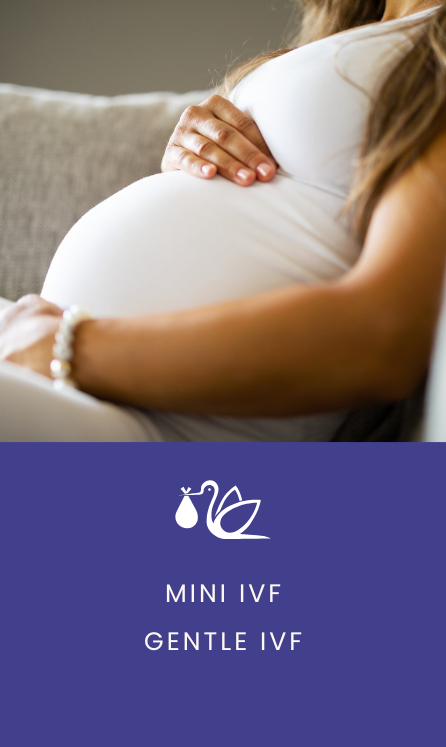
Mini IVF (Minimal Stimulation IVF) is an IVF approach designed to prioritize egg quality, safety, comfort, and thoughtful outcomes—using significantly less medication than conventional IVF. At Hanabusa IVF, Mini IVF is grounded in authentic Japanese mild-stimulation principles: support the body’s natural selection, recruit a small number of follicles, and focus on creating the strongest possible embryos without overstimulation. For many patients—especially those with diminished ovarian reserve (DOR), fertility after 40, or those who prefer a lower-burden IVF experience—Mini IVF can offer a more body-respecting path forward.
If you've been told IVF is your only option, or you've already gone through failed IVF cycles, this video may completely change the way you think about fertility treatment.
Diminished Ovarian Reserve (DOR) + Minimal Stimulation IVF
Description: For patients with diminished ovarian reserve, Minimal Stimulation IVF focuses on retrieving a few high-quality eggs with lower medication and a plan tailored to your biology—because “more” isn’t always better.


You have diminished ovarian reserve (DOR) or are concerned about overmedicating
You’re 40+ and want a quality-first approach
You’ve had poor response or poor egg/embryo quality in higher-dose IVF cycles
You prefer fewer injections, fewer monitoring visits, and a lower-burden experience
You’re looking for a thoughtful IVF option that prioritizes safety and comfort
Your evaluation suggests you’re likely to produce a strong egg yield safely with conventional IVF
You need embryo numbers quickly for family size planning (we’ll advise based on your goals)
Your medical history indicates a different protocol would be more effective

Medication needs (often fewer injections, which can lower medication cost)
Monitoring needs (varies by patient response and timing)
Retrieval/anesthesia approach
Fertilization method (IVF vs. ICSI)
Embryo culture, freezing (vitrification), and storage
Whether you proceed with FET
Often included: retrieval procedure + embryo culture (basic lab services)
Often separate: medications, labs, ultrasounds, donor sperm costs, additional testing
Mini IVF success depends on matching the approach to the right patient. The goal is not the most eggs—it’s the best chance of creating a healthy embryo and transferring into the right uterine environment.
Age and ovarian reserve (AMH, FSH, AFC)
Egg maturity and embryo development
Sperm factors and fertilization method
Uterine factors and transfer timing (fresh vs. frozen)
Prior IVF history and response patterns
Embryo transfer strategy (single embryo transfer planning)
Monitoring visits are typically fewer, but still precise and important
Outpatient procedure; recovery is often easier due to fewer follicles
Fertilization and embryo development updates over several days
Often involves frozen transfer planning to optimize the uterine environment, with minimal medication support when appropriate



.png)

.png)
.png)

You’re a fit for Traditional Fertility Care if any of these statements resonate with you:
You’re just getting started
You want clear first steps
You’ve explored clinics, but still feel at the beginning
You need fertility testing
Your labs look reassuring
Your situation feels straightforward
You have fewer complicating factors
You’re considering IUI
You’re new to IVF
You’re planning an FET
You’re considering PGT
If anything, complex becomes evident, we smoothly upgrade your pathway.
You’re a fit for Complex Care if any of these statements resonate with you:
Low AMH/AFC or DOR concerns
You have Diminished Ovarian Reserve (DOR)
You have POI or high FSH concerns
You’re considering Ovarian Rejuvenation (PRP)
Age 40+ or time feels limited
Prior IVF didn’t respond as hoped
Low egg numbers / embryo growth issues
Unsuccessful embryo transfers
Recurrent pregnancy loss (2+ losses)
Male factor needs ICSI or TESE
You’ve been told your case is complex
If your case is complex from the start, we build the right strategy from day one.