Step-by-Step


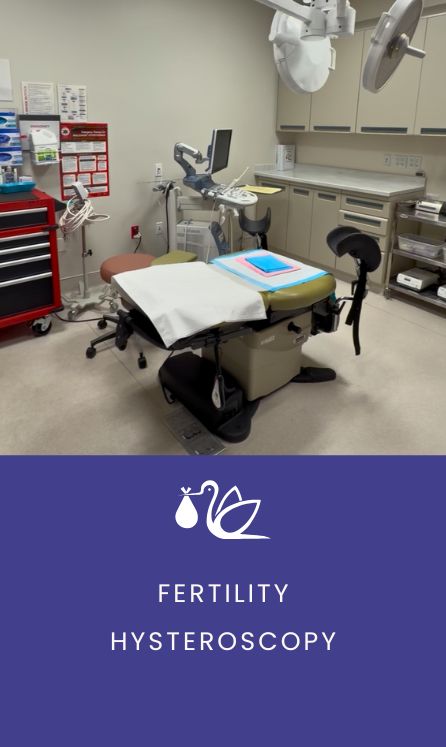
When you’re trying to conceive—especially after miscarriage, failed transfer, or unexplained infertility—you deserve to know that the uterine environment is truly ready. Fertility hysteroscopy is a precise, minimally invasive way to directly evaluate the inside of the uterus and, in many cases, treat problems in the same procedure. At Hanabusa IVF, we use hysteroscopy thoughtfully: not as an automatic extra, but as a targeted tool when it can change outcomes and reduce wasted cycles.

When the uterus is the question, hysteroscopy provides the clearest answer. We use it to bring clarity, treat what’s treatable, and support better transfer and pregnancy outcomes.

We recommend hysteroscopy when it’s likely to change management—especially after recurrent loss or failed transfers.
When appropriate, we aim to diagnose and treat in the same procedure, then confirm readiness before next steps.
Procedure timing and follow-up are designed to support your fertility timeline.
We align hysteroscopy findings with embryo transfer planning so your next cycle is built on a healthier foundation.
Clear instructions, realistic expectations, and supportive follow-up to reduce anxiety.


A minimally invasive procedure that uses a tiny camera to look directly inside the uterus—and, when needed, treat issues like polyps, fibroids, or scar tissue—to help create the best possible environment for implantation and pregnancy.

Imaging suggests a polyp, submucosal fibroid, adhesions, or a possible uterine septum
You’ve had recurrent pregnancy loss and uterine factors need clear evaluation
You’ve had failed embryo transfers or repeated implantation failure
You have abnormal bleeding patterns that suggest a cavity issue
A saline sonogram or ultrasound showed unclear/abnormal findings and direct visualization is needed
Your evaluation shows no cavity concerns and you’re early in treatment (we’ll advise based on your history)
You need basic imaging first (ultrasound or saline sonogram) before deciding on hysteroscopy

Diagnostic hysteroscopy vs operative hysteroscopy (treating findings adds complexity)
Facility and anesthesia requirements (if applicable)
Pathology testing (e.g., if a polyp is removed)
Follow-up imaging or monitoring
How hysteroscopy fits into IVF/FET planning
Often included: procedure itself and standard post-procedure follow-up
Often separate: anesthesia/facility fees (if applicable), pathology, additional procedures, some imaging
Hysteroscopy doesn’t “guarantee” pregnancy. What it can do is remove barriers that reduce success—especially when implantation or early pregnancy has been repeatedly interrupted by a cavity issue.
The type and size of the finding (polyps, adhesions, fibroids, septum)
Whether the issue is fully corrected
Healing time and follow-up confirmation
Embryo factors, age, and underlying fertility diagnosis
Often scheduled at a specific point in the cycle (your team will guide timing)
Typically outpatient; length depends on whether treatment is needed
Mild cramping or light bleeding can occur; most people return to normal activities quickly (your team will give specific instructions)
We handle: planning, procedure, findings review, treatment pathway coordination
You do: follow pre/post-procedure instructions, take prescribed meds if needed, attend follow-up



.png)

.png)
.png)

You’re a fit for Traditional Fertility Care if any of these statements resonate with you:
You’re just getting started
You want clear first steps
You’ve explored clinics, but still feel at the beginning
You need fertility testing
Your labs look reassuring
Your situation feels straightforward
You have fewer complicating factors
You’re considering IUI
You’re new to IVF
You’re planning an FET
You’re considering PGT
If anything, complex becomes evident, we smoothly upgrade your pathway.
You’re a fit for Complex Care if any of these statements resonate with you:
Low AMH/AFC or DOR concerns
You have Diminished Ovarian Reserve (DOR)
You have POI or high FSH concerns
You’re considering Ovarian Rejuvenation (PRP)
Age 40+ or time feels limited
Prior IVF didn’t respond as hoped
Low egg numbers / embryo growth issues
Unsuccessful embryo transfers
Recurrent pregnancy loss (2+ losses)
Male factor needs ICSI or TESE
You’ve been told your case is complex
If your case is complex from the start, we build the right strategy from day one.