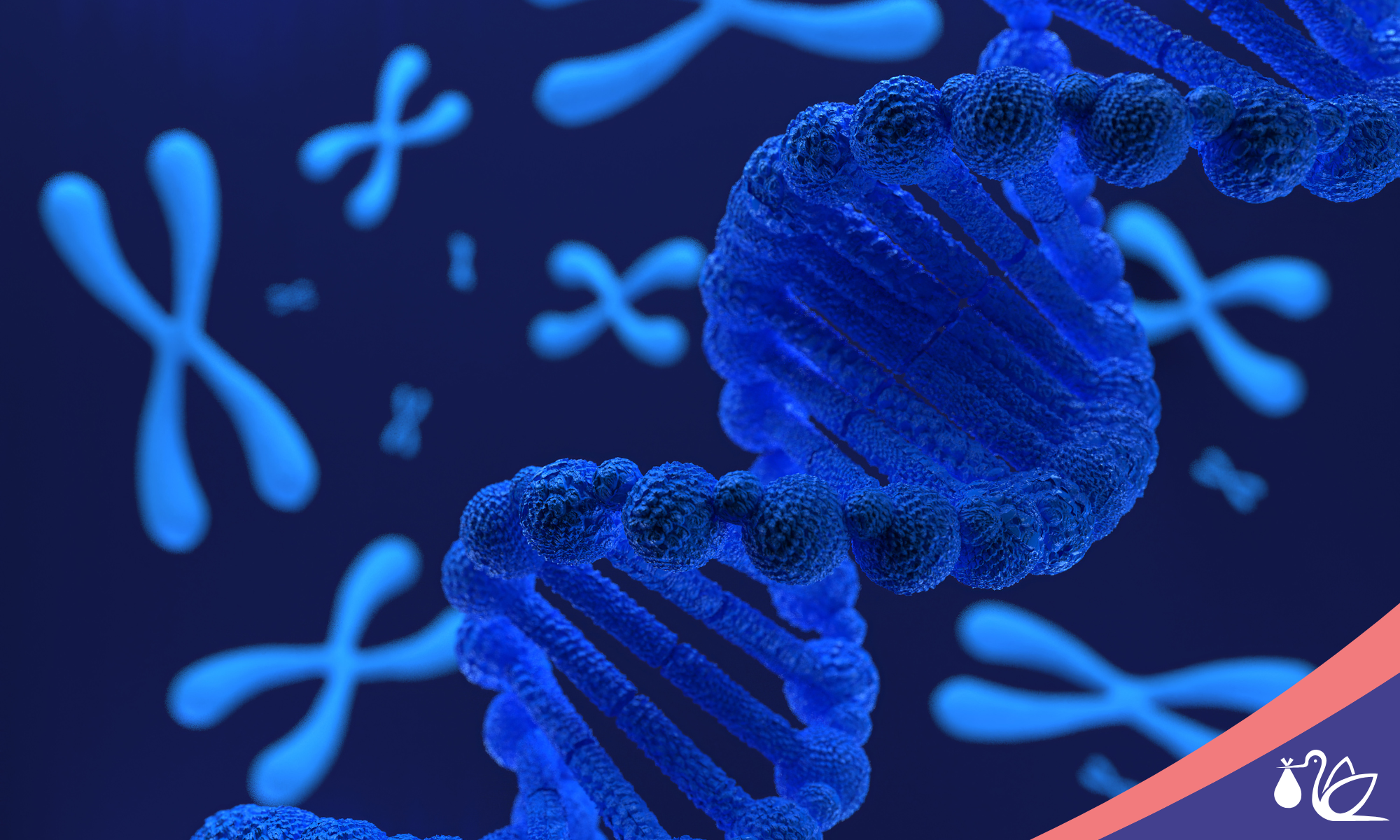
Chromosomes are at the center of some of the most important questions in IVF: why embryos fail to implant, why miscarriages happen, and why certain fertility challenges are harder to overcome than others. For patients going through IVF, understanding how chromosomes work in eggs, sperm, and embryos helps make sense of test results, grading reports, and recommendations about genetic testing.
At Hanabusa IVF, chromosomal health is a core consideration in how cycles are designed and how embryos are evaluated, particularly for patients in complex cases involving age-related fertility decline, diminished ovarian reserve, or recurrent pregnancy loss.
How Many Chromosomes Does a Healthy Human Embryo Have?
A healthy human has 46 chromosomes arranged in 23 pairs. These 23 pairs include 22 pairs of autosomes (non-sex chromosomes) and 1 pair of sex chromosomes (XX for female, XY for male). When a sperm cell fertilizes an egg, each contributes 23 chromosomes, resulting in the 46-chromosome total in the fertilized egg, which then becomes the developing embryo.
An embryo with the correct 46 chromosomes is called euploid. An embryo with an incorrect number of chromosomes, whether extra or missing, is called aneuploid. Aneuploid embryos are the most common cause of failed IVF implantation and early pregnancy loss.
Where Chromosomal Errors Come From
Chromosomal errors in embryos most commonly originate in the egg rather than the sperm. During the formation of egg cells (meiosis), chromosomes must separate correctly so that each egg receives exactly 23. Errors in this separation process, called nondisjunction, result in eggs that carry too many or too few chromosomes. When fertilized, the resulting embryo is aneuploid.
The rate of chromosomal errors in eggs increases significantly with age. This is why IVF success rates per embryo transferred decline with maternal age, and why the risk of chromosomally abnormal embryos is substantially higher for patients in their late thirties and forties compared to those in their twenties and early thirties.
"Chromosomal errors in eggs are not caused by anything a patient did. They are a biological reality that becomes more common as women age, and it is one of the primary reasons fertility declines with age rather than just the number of eggs. It is important that patients understand this, because it shapes the kind of care they need."
— Dr. Lyndon Chang, Medical Director at Hanabusa IVF
What Happens to Aneuploid Embryos?
Most aneuploid embryos either fail to implant in the uterus or result in a very early pregnancy loss that may not even be recognized as a pregnancy. A smaller proportion, particularly those with specific chromosomal configurations such as trisomy 21 (Down syndrome), trisomy 18, or trisomy 13, can implant and progress further but may result in a pregnancy with chromosomal differences.
Aneuploid embryos can appear visually normal under the microscope, which is why morphology grading alone cannot distinguish them from euploid embryos. An embryo graded as high quality by appearance can still be chromosomally abnormal. This is one of the core limitations of morphology-based embryo selection and one of the reasons preimplantation genetic testing was developed.
What Is Preimplantation Genetic Testing for Aneuploidy (PGT-A)?
PGT-A is a type of chromosomal analysis performed on embryo cells before transfer. A small biopsy of cells is taken from the blastocyst, typically on day 5 or 6 of development, and sent to a genetic laboratory for chromosomal analysis. Results classify each embryo as euploid (chromosomally normal), aneuploid (chromosomally abnormal), or mosaic (a mix of normal and abnormal cells).
At Hanabusa IVF, PGT-A is performed in collaboration with Gattaca, a specialized preimplantation genetic testing provider. Euploid embryos identified by PGT-A have significantly higher implantation rates per transfer than untested embryos, particularly for patients over 35.
Chromosomal Abnormalities and Recurrent Pregnancy Loss
One of the most common causes of recurrent pregnancy loss is chromosomal abnormality in the embryo. When pregnancies are lost before 10 weeks, chromosomal issues are estimated to be responsible for the majority of those losses. Patients who have experienced multiple miscarriages are often not carrying a problem with themselves or their uterus but are consistently conceiving embryos that are chromosomally abnormal and cannot sustain development.
For patients in this category, PGT-A can be an important tool. By identifying euploid embryos before transfer, it is possible to select embryos that are most likely to implant and reach a viable pregnancy, reducing the cycle of unsuccessful transfers and miscarriages.
"Recurrent pregnancy loss is one of the most painful experiences in fertility medicine. When chromosomal issues are driving those losses, helping patients understand that and designing a path toward a euploid embryo transfer can genuinely change the outcome. That conversation starts with understanding the chromosomes."
— Dr. Diana LeBlanc, a Fertility Specialist at Hanabusa IVF
Diminished Ovarian Reserve and Chromosome Quality
Patients with diminished ovarian reserve (DOR) often face not only fewer eggs per retrieval cycle but also a higher proportion of chromosomally abnormal eggs. This is because DOR frequently affects older patients or those whose eggs have undergone more cell divisions with associated chromosomal error accumulation. At Hanabusa IVF, the approach to DOR is individualized, with stimulation protocols designed to optimize the quality of the eggs retrieved and clear conversations about what chromosomal testing can and cannot add to the clinical picture given each patient's embryo count and situation.
Frequently Asked Questions
How many chromosomes should a healthy embryo have?
A healthy human embryo should have 46 chromosomes arranged in 23 pairs. This is called being euploid. An embryo with more or fewer chromosomes is aneuploid and is unlikely to implant successfully or result in a healthy pregnancy.
Can a chromosomally abnormal embryo look normal?
Yes. Chromosomal status cannot be assessed by visual inspection or morphology grading under a microscope. An embryo that appears to be high quality by appearance can still be aneuploid. Preimplantation genetic testing (PGT-A) is the only way to assess chromosomal status before transfer.
Why do more chromosomal errors occur with age?
Eggs are formed during fetal development and remain in a suspended state until ovulation, which can be decades later. The cellular machinery responsible for correctly separating chromosomes during meiosis becomes less reliable over time, leading to a higher rate of chromosomal errors in eggs retrieved from older patients.
Does the sperm contribute to chromosomal errors?
Sperm can carry chromosomal abnormalities, but the majority of chromosomal errors in embryos originate in the egg. Sperm are produced continuously throughout life and undergo different cell division processes that are generally more reliable. That said, significant sperm DNA fragmentation or structural chromosomal abnormalities in the male partner can contribute to embryo chromosomal problems.
Can PGT-A screen for all chromosomal problems?
PGT-A screens effectively for aneuploidy, meaning the wrong number of chromosomes. It does not screen for all possible genetic conditions. Single-gene disorders require a separate test (PGT-M), and some structural rearrangements require PGT-SR. PGT-A also cannot guarantee a live birth, even from a euploid embryo.
Chromosomes, Outcomes, and Individualized Care
Chromosomal health is one of the most fundamental variables in IVF success. Understanding how chromosomal errors arise, what they mean for embryo viability, and how testing can inform transfer decisions is an important part of navigating the IVF process with clear expectations. At Hanabusa IVF, chromosomal considerations are integrated into how every patient's cycle is designed, from stimulation protocol to embryo selection strategy.
If you have questions about chromosomal testing, recurrent loss, or how Hanabusa IVF approaches complex fertility cases, a consultation is the right next step.