.png)
Platelet-rich plasma (PRP) therapy for the ovaries has attracted significant attention from patients with diminished ovarian reserve, premature ovarian insufficiency, and fertility concerns related to age. The concept is compelling: using growth factors concentrated from your own blood to potentially stimulate follicular activity in ovaries that have become less responsive.
At Hanabusa IVF, where research-informed care is central to our approach, we believe patients considering ovarian rejuvenation with PRP deserve a clear-eyed view of what the science currently shows — without the exaggeration that often surrounds emerging fertility treatments.
What Is Ovarian PRP Therapy?
Platelet-rich plasma is a concentration of platelets derived from the patient's own blood. Platelets release growth factors — including platelet-derived growth factor (PDGF), vascular endothelial growth factor (VEGF), and insulin-like growth factor (IGF) — that support tissue repair, cellular regeneration, and vascular development.
How the Procedure Works
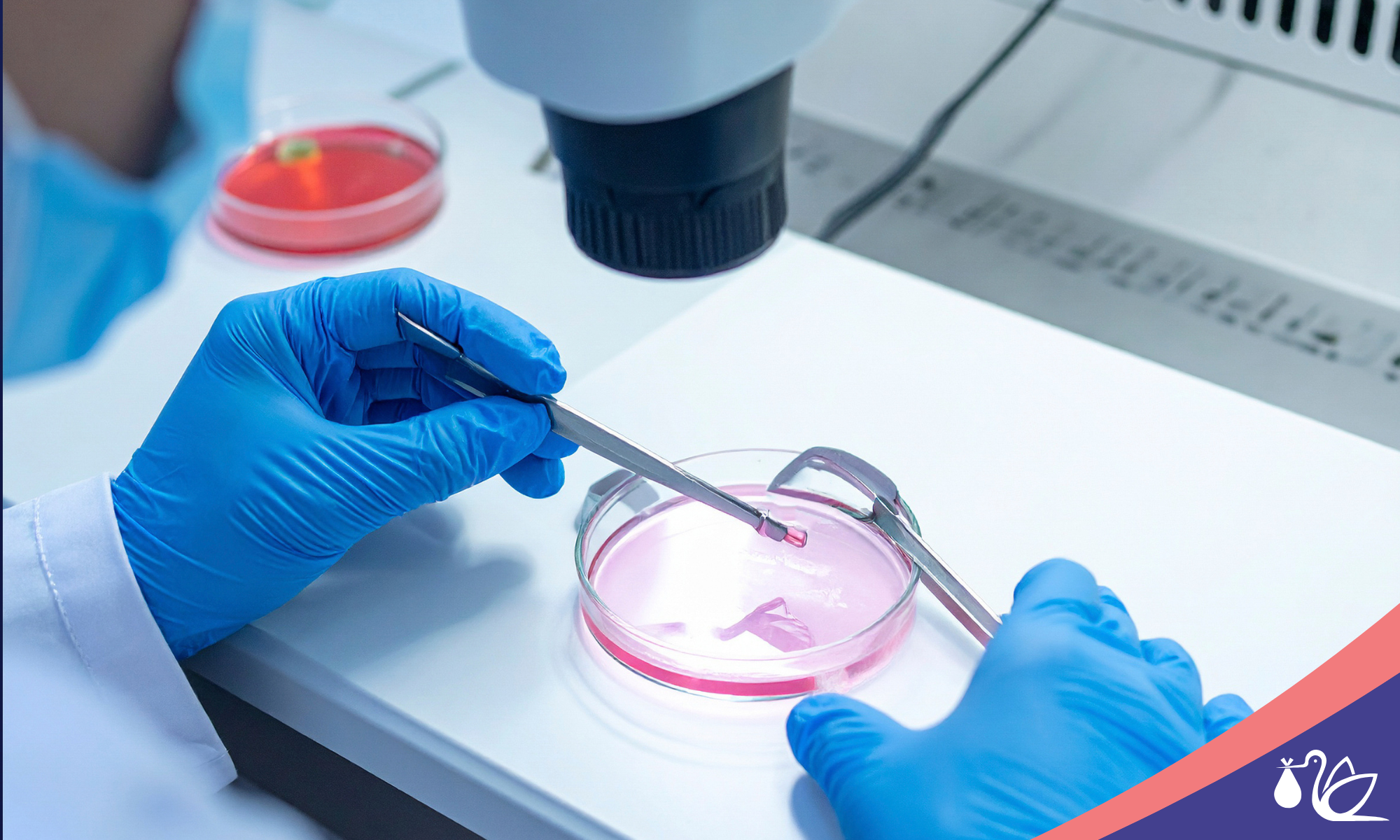
In ovarian PRP therapy, a blood sample is drawn and centrifuged to concentrate the platelets. The resulting PRP is injected directly into the ovarian tissue under transvaginal ultrasound guidance, typically under light sedation. The procedure is outpatient, uses only the patient's own blood (minimizing immune reaction risk), and requires minimal recovery time.
The Theoretical Mechanism
The hypothesis is that growth factors released by the injected platelets may activate dormant follicles, improve the local ovarian microenvironment, or support follicular development in ways that could improve both AMH levels and response to stimulation. This is a biologically plausible mechanism — which is why the research has attracted serious scientific interest, even though the evidence base is still developing.
What the 2026 Clinical Evidence Actually Shows
As of 2026, ovarian PRP therapy remains investigational. It is not FDA-approved as a fertility treatment, and no large, randomized controlled trials have definitively established its efficacy for improving live birth rates.
What Existing Studies Have Found
A growing body of smaller studies and case series has documented instances where patients with low AMH or confirmed premature ovarian insufficiency showed transient improvements in AMH levels, FSH normalization, or follicular activity following ovarian PRP injection. A small number of these patients subsequently conceived, including some who had previously been unable to produce retrievable eggs.
These results are clinically meaningful enough to justify continued investigation. They are not sufficient to draw firm conclusions about how consistently PRP works, for which patient profiles it is most effective, or how durable any effects may be.
Limitations of Current Evidence
The available studies share common methodological limitations: small sample sizes, lack of randomized control groups, variable PRP preparation protocols, heterogeneous patient populations, and short follow-up periods. Without standardization, comparing results across studies is difficult. The fertility research community awaits results from more rigorously designed trials currently underway.
Ongoing Clinical Trials in 2026
Multiple registered clinical trials are actively studying ovarian PRP as of 2026, including trials in the United States, Greece, Spain, Turkey, and China. These trials include randomized designs and larger patient cohorts that will provide substantially more reliable evidence than what currently exists. Patients interested in trial participation can search ClinicalTrials.gov for current registered studies on platelet-rich plasma and ovarian insufficiency.
"PRP for the ovaries is a genuinely interesting area of research. The biology makes sense, and some patients have had outcomes that were not predicted by their markers. At the same time, I want to be honest that we are still in early stages of understanding who benefits and why. It is a reasonable option to consider for the right patient — with realistic expectations."
— Dr. Diana LeBlanc, a Fertility Specialist at Hanabusa IVF
Who May Be a Candidate for Ovarian PRP at Hanabusa IVF
Ovarian PRP is not offered to every patient at Hanabusa IVF — it is evaluated for specific clinical situations. Potential candidates include:
- Patients with confirmed diminished ovarian reserve who have had poor ovarian response in conventional IVF and are exploring options before transitioning to donor eggs
- Patients with POI who still have some detectable follicular activity and want to attempt to improve the ovarian environment before a natural cycle or minimal stimulation attempt
- Patients with very low AMH (below 0.5 ng/mL) who have a meaningful clinical rationale for attempting to activate residual follicular potential
Who Is Not an Appropriate Candidate
PRP ovarian therapy is not indicated for patients with complete ovarian failure and no detectable follicular activity. The procedure has no mechanism for creating new follicles where none exist. Presenting PRP as a treatment for complete ovarian failure would be misleading, and Hanabusa IVF does not do so.
"What I find most useful about PRP is the way it opens a conversation with patients who feel like they have no options left. For a carefully selected group, it may provide a window. But I always want to be transparent: this is not a guaranteed solution, and the decision to try it needs to be grounded in honest evaluation."
— Dr. Lyndon Chang, Medical Director at Hanabusa IVF
What to Expect From the PRP Procedure at Hanabusa IVF
The procedure is performed as an outpatient appointment. A blood draw is centrifuged to isolate PRP, which is injected into the ovarian tissue under transvaginal ultrasound guidance with light sedation. Recovery is typically minimal, and patients usually return to normal activity within a day.
Following the procedure, the care team monitors ovarian response through serial ultrasound and blood work over the following four to eight weeks. Some patients show measurable changes in AMH or follicular activity within this timeframe. Others show no significant change. This variability is consistent with the current state of evidence and reflects the fact that individual ovarian biology does not respond uniformly.
What Ovarian PRP Cannot Do
Clear boundaries matter. Ovarian PRP cannot create new eggs from scratch. It cannot reliably normalize AMH in most patients. It does not replace the role of a well-designed IVF protocol or donor egg treatment when those are the appropriate paths.
PRP is most plausible where residual follicular biology provides something to activate. Where that does not exist, the procedure has no mechanism to work with.
Frequently Asked Questions About Ovarian Rejuvenation PRP
Is ovarian PRP FDA-approved as a fertility treatment?
No. Ovarian PRP is currently investigational and is not FDA-approved as a fertility treatment. It is offered at select fertility centers, including Hanabusa IVF, for carefully selected patients who understand the evidence limitations and have a clear clinical rationale for attempting it.
How soon do patients see results from ovarian PRP?
Some patients show changes in AMH or follicular activity within four to eight weeks. Others see no measurable response. The timeline and probability of response are not reliably predictable for any individual patient based on current evidence.
Can PRP help with POI specifically?
For POI patients with residual follicular activity, ovarian PRP may be worth exploring as part of an individualized treatment plan. For patients with complete ovarian failure and no detectable follicles, the evidence does not support PRP as a meaningful intervention.
What clinical trials are studying ovarian PRP in 2026?
Multiple registered trials are underway globally, including randomized studies with larger cohorts. Patients can search ClinicalTrials.gov for "platelet rich plasma ovarian insufficiency" to find current registered studies.
How does Hanabusa IVF decide if I'm a candidate for ovarian PRP?
Candidacy is determined through a full fertility evaluation — including current AMH, antral follicle count, FSH trend, age, and prior treatment history. PRP is only offered when there is a genuine clinical rationale and the patient has realistic, evidence-based expectations about potential outcomes.
Honest Evaluation Always Comes First
At Hanabusa IVF, ovarian PRP is one carefully considered tool for specific complex cases — not a routine recommendation or a promised solution. What it represents is a thoughtful option for patients who still have some residual ovarian biology and who have not yet found a path that works.
If you are interested in ovarian rejuvenation or want to understand whether PRP might have a place in your fertility plan, the starting point is a comprehensive evaluation. We will give you an honest assessment of where your biology is and what options actually make sense for your situation.
Book Your Consultation at Hanabusa IVF