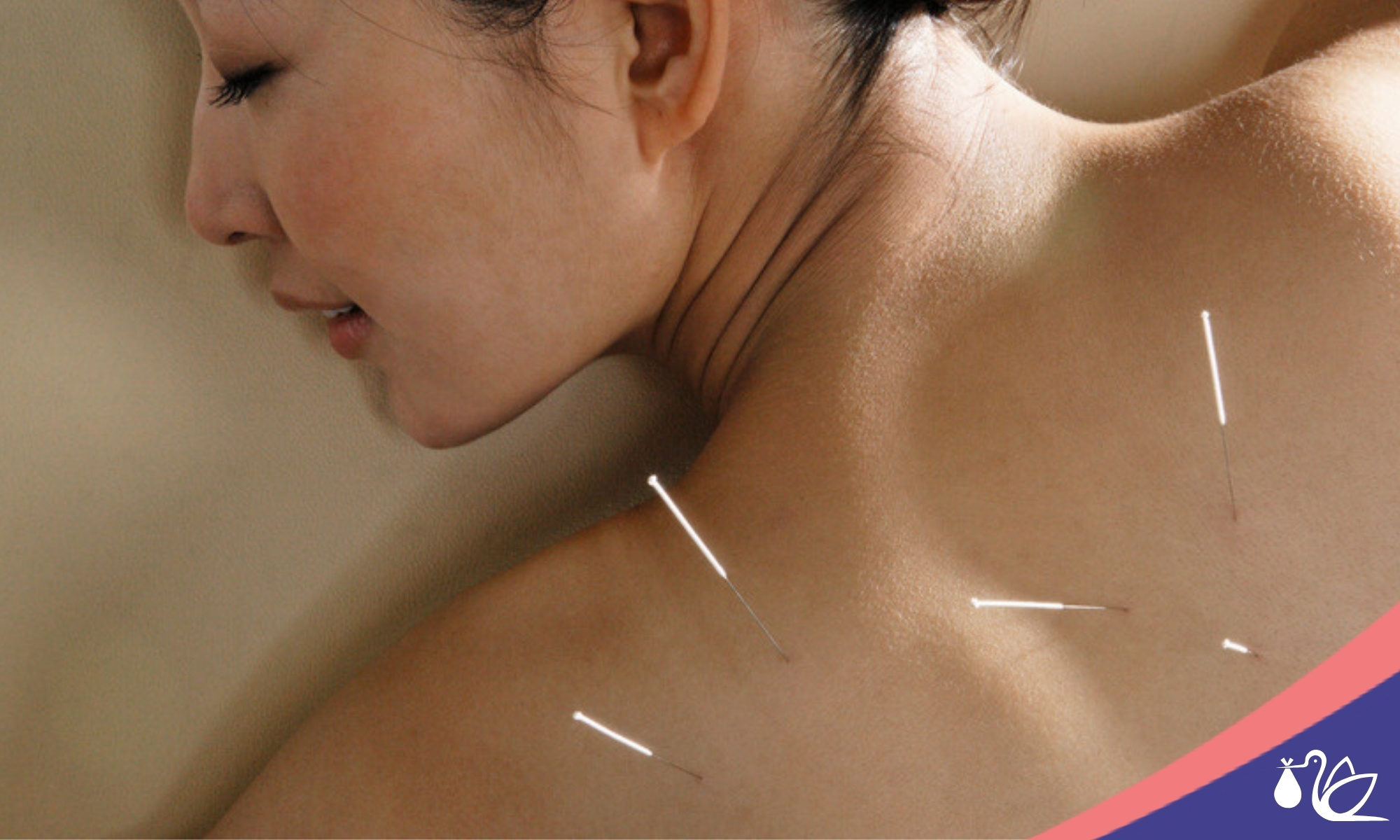
When you are going through IVF, it is natural to look for anything that might help. A friend may have mentioned that acupuncture helped her relax during treatment. You may have read articles claiming it can improve success rates. Now you are wondering whether it is worth trying, and more importantly, whether it is safe.
These are good questions, and you deserve honest answers. The short version is this: when performed by a licensed, experienced practitioner, acupuncture is generally considered safe during IVF (Cheong et al., Cochrane Database Syst Rev., 2013). The research on whether it improves pregnancy or live birth rates, however, is mixed, and the strongest studies have not shown a clear benefit.
This guide explains what is known about the safety of acupuncture during IVF, what the research actually shows, how acupuncture might complement your medical care, timing considerations, and the questions to ask before you begin. At Hanabusa IVF, we want you to make choices that feel right for you, based on clear information rather than hype.
Is Acupuncture Safe During IVF?
For most patients, acupuncture is considered low risk when it is performed by a properly trained and licensed practitioner using sterile, single-use needles. Serious complications are rare in published reports (White, Acupunct Med, 2004).
The most common side effects are mild and short-lived:
- Slight bruising or soreness where needles were placed
- Minor bleeding at a needle site
- Temporary lightheadedness or fatigue after a session
There are a few important safety points to keep in mind during fertility treatment:
- Choose a licensed provider. In California, acupuncturists are licensed by the California Acupuncture Board and use the credential L.Ac.
- Share your treatment details. Your acupuncturist should know where you are in your cycle, which medications you are taking, and whether you have had a recent retrieval or transfer.
- Tell your care team. Let your Hanabusa IVF physician and nurse know you are receiving acupuncture, so your whole team is working from the same information.
- Be cautious with herbs. Some acupuncture practices also recommend herbal remedies. Herbs and supplements can interact with fertility medications or affect hormone levels, so never start them without checking with your physician first.
If you have a bleeding disorder, take blood thinners, or have a medical condition that affects your immune system, talk with your physician before trying acupuncture.
What the Research Actually Shows
Interest in acupuncture for IVF grew after a small German study published in 2002 reported higher pregnancy rates in women who received acupuncture around embryo transfer. That early study encouraged many patients and practitioners, and it led to a wave of further research.
Since then, larger and more carefully designed studies have produced less encouraging results:
- A large randomized trial published in JAMA in 2018 followed 848 women undergoing IVF in Australia and New Zealand. Women who received acupuncture had live birth rates similar to those who received a sham (placebo) procedure. The researchers did not find a significant difference between the groups.
- A Cochrane systematic review updated in 2021 looked at the combined evidence from many trials. It concluded that the evidence is of low certainty and does not clearly show that acupuncture improves live birth rates during IVF.
Why early results and later results differ
Early acupuncture studies were often small, and many compared acupuncture with no treatment at all. In that kind of design, it is hard to separate the effect of the needles from the effect of extra attention, rest, and reassurance. Later trials addressed this by comparing real acupuncture with a sham procedure that looks and feels similar but does not follow traditional acupuncture points or depth.
Larger, well-controlled trials are better at showing whether a treatment truly changes outcomes. When those trials found little or no difference between real and sham acupuncture, it suggested that the benefits seen in some early studies may have come from other factors, such as differences in the patients studied or in clinic success rates.
It is important to understand what these findings mean. They do not prove acupuncture is harmful, and they do not rule out benefits that are hard to measure in large trials, such as how relaxed or supported a patient feels. They do suggest that patients should not expect acupuncture to meaningfully change their chances of success.
"I want patients to have realistic expectations. The best research we have does not show that acupuncture raises live birth rates, but some patients find it helps them feel calmer and more cared for during treatment. Both of those things can be true." - Dr. Lyndon Chang, Medical Director at Hanabusa IVF
Some studies have looked at whether acupuncture reduces anxiety during IVF. Results here are also mixed, but some patients report that sessions give them a dedicated time to rest and feel supported. If that is meaningful to you, it can be a reasonable choice, as long as it is safe and does not replace medical care.
How Acupuncture Might Complement (Not Replace) IVF
The most helpful way to think about acupuncture is as a possible complement to your medical treatment, not a substitute for it. Acupuncture cannot replace the medications, monitoring, laboratory work, and procedures that make IVF possible.
For some patients, acupuncture may support treatment in other ways:
- Offering a regular, calming routine during a stressful time
- Creating space to rest and focus on your wellbeing
- Helping you feel more actively involved in your own care
- Providing an additional source of emotional support
These benefits are personal, and they will not apply to everyone. Some patients find acupuncture relaxing. Others find extra appointments add stress rather than relieving it. Both responses are completely valid.
At Hanabusa IVF, our "One Size Doesn't Fit All" philosophy applies to complementary care, too. We do not believe every patient needs acupuncture, and we do not believe more interventions automatically lead to better results. Just as more medication is not always better, more appointments are not always better. The right plan is the one that fits your body, your history, and your comfort level.
Hanabusa IVF cares for patients at every stage, from those starting their first cycle to those with complex histories such as diminished ovarian reserve or previous unsuccessful cycles. For patients who want to explore complementary options, our acupuncture network lists providers patients may choose to consider. You can also learn about other ways we support patients on our IVF wellness and support services page.
Other mind-body practices may also help with stress. Our guide to meditation for fertility and stress reduction offers simple techniques you can try at home without adding another appointment to your week. Many patients also find comfort in connecting with others, and our guide to IVF support groups explains how to build a support network during treatment.
Timing Considerations
If you decide to try acupuncture, timing matters. Coordinating sessions with your IVF schedule helps keep everything safe and manageable.
Common approaches include:
- Before your cycle begins. Some patients start sessions in the weeks before stimulation as a way to settle into a calming routine.
- During stimulation. Sessions may continue during stimulation, as long as your acupuncturist knows where you are in your cycle and avoids anything that conflicts with your care.
- Around embryo transfer. Many of the studies on acupuncture and IVF focused on sessions shortly before and after embryo transfer, so this is a common time patients ask about.
A few practical tips can help:
- Plan sessions around monitoring appointments, which often happen early in the morning and on short notice.
- Avoid scheduling sessions that would make you rush to or from the clinic.
- Do not let acupuncture appointments interfere with medication timing, especially your trigger shot.
- After egg retrieval, ask your care team when it is comfortable to resume sessions, especially if you feel bloated or sore.
To see how monitoring, medications, and procedures typically line up during a cycle, our IVF injection schedule day by day guide offers a general overview. Your own schedule will always be personalized.
For practical guidance on choosing a provider in San Diego and coordinating sessions with your treatment, read our guide to acupuncture for IVF support in San Diego.
Questions to Ask Before Trying It
Before you book your first session, it helps to ask a few questions, both of your care team and of any acupuncturist you are considering.
Questions for your Hanabusa IVF care team:
- Is there any reason acupuncture might not be safe for me?
- Are there times during my cycle when I should avoid sessions?
- Should I avoid any herbs or supplements an acupuncturist might suggest?
- How should I let you know if I start acupuncture?
Questions for an acupuncturist:
- Are you licensed by the California Acupuncture Board?
- How much experience do you have working with patients during IVF?
- Do you use sterile, single-use needles?
- How will you adjust sessions based on where I am in my cycle?
- Are you comfortable communicating with my fertility team if needed?
"The most important thing is communication. If a patient wants to try acupuncture, we simply want to know about it, so we can make sure everything in their plan works together safely." - Dr. Diana LeBlanc, a Fertility Specialist at Hanabusa IVF
If an acupuncturist promises that sessions will significantly raise your chances of pregnancy, that is a reason for caution. A trustworthy practitioner will be honest about what acupuncture can and cannot do.
Frequently Asked Questions
Is acupuncture safe during an IVF cycle?
For most patients, acupuncture is considered safe during IVF when performed by a licensed practitioner using sterile, single-use needles. Side effects are usually mild, such as slight bruising or soreness. Always tell your fertility care team before starting.
Does acupuncture improve IVF success rates?
The strongest research so far, including a large 2018 randomized trial and a 2021 Cochrane review, has not shown that acupuncture clearly improves live birth rates during IVF. Some patients still find it helps them feel calmer and more supported.
When is acupuncture typically used during treatment?
Some patients begin sessions before stimulation, continue during the cycle, or schedule sessions around embryo transfer. Timing should always be coordinated with your monitoring appointments, medications, and procedures.
Can acupuncture replace part of my IVF protocol?
No. Acupuncture cannot replace the medications, monitoring, laboratory work, or procedures that make IVF possible. If you choose it, it should be a complement to your medical treatment, never a substitute.
Does Hanabusa recommend acupuncture?
Hanabusa IVF does not consider acupuncture necessary for every patient. For those who are interested, our acupuncture network page lists providers patients may choose to explore, and our team is happy to discuss whether it fits your plan.
Curious How Complementary Care Might Fit Your Plan?
So, is acupuncture safe during IVF? For most patients working with a licensed provider, yes. Whether it improves outcomes is far less certain, and the best evidence suggests it should be viewed as a source of comfort and support rather than a way to raise success rates.
At Hanabusa IVF, your plan is built around you, including the choices you make about complementary care. Curious how complementary care might fit your plan? Talk to your care team before starting any new practice, or book a consultation at hanabusaivf.com/book-a-consultation.
See all supporting studies and references used to produce our content: CLICK HERE