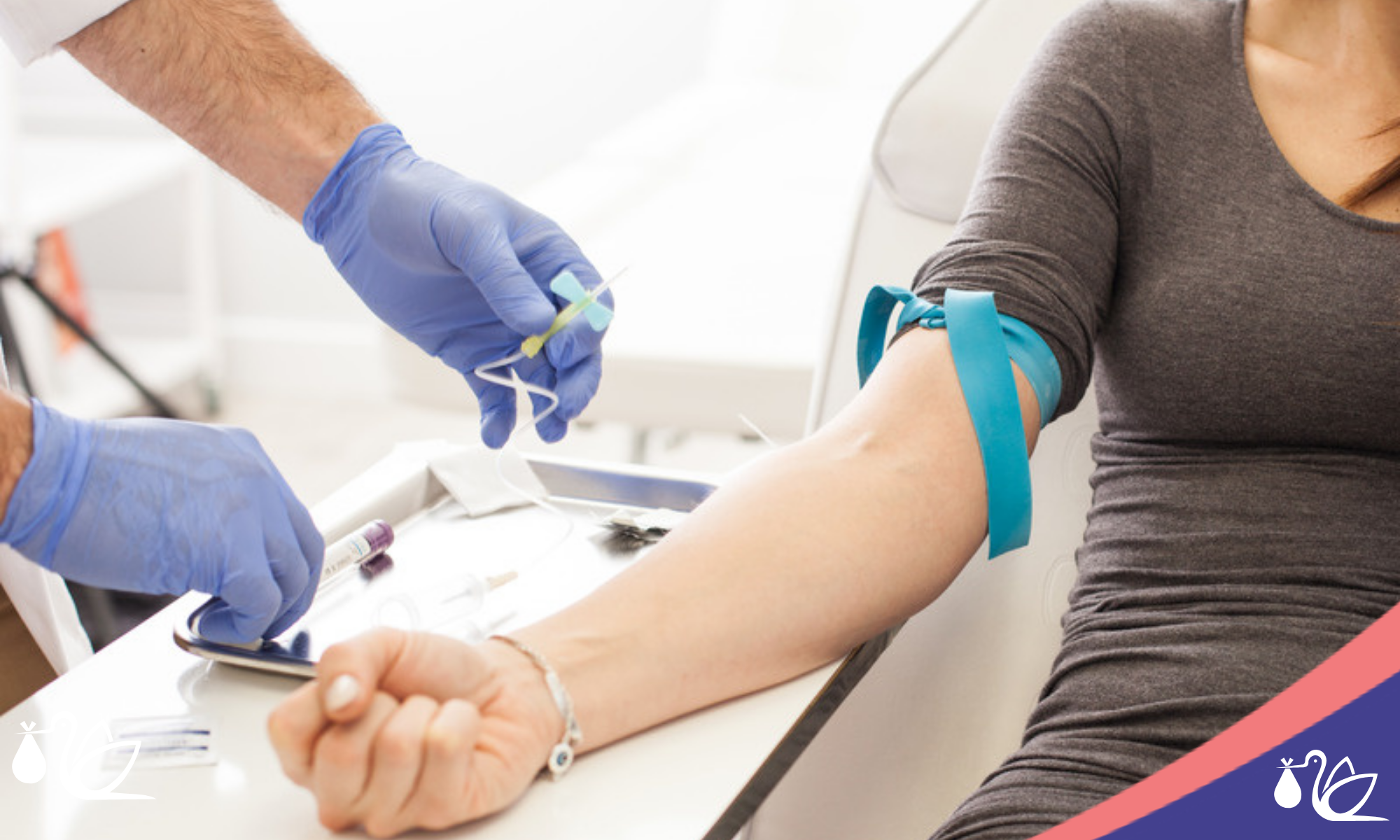
By the middle of an IVF cycle, your arms may feel like they have seen more needles than ever before. Blood draw after blood draw, followed by a call with numbers that may not mean much to you yet. It is very human to want to understand those numbers, and to worry when one seems higher or lower than you expected.
Your blood work is one of the most valuable tools your care team has during treatment. Alongside ultrasound, it shows how your body is responding in real time, so your protocol can be adjusted safely and precisely.
This guide explains what estradiol, LH, and progesterone each track during IVF, why they are checked so often, and why there is no single universal chart for what is \"normal.\" At Hanabusa IVF in San Diego, every result is interpreted in the context of your individual protocol, not against a one-size-fits-all number.
Why Blood Work Happens So Frequently
During stimulation, hormone levels can shift from one day to the next. Follicles grow, estradiol rises, and your body may begin preparing to ovulate on its own. Frequent blood work allows your care team to see those changes as they happen and respond quickly.
Blood work is usually paired with a transvaginal ultrasound at each monitoring visit. The ultrasound shows the size and number of follicles, while the bloodwork shows how those follicles are functioning hormonally. Together, they give a much more complete picture than either one alone.
For a full explanation of what happens at monitoring visits and why their frequency varies from patient to patient, read our guide to follicle monitoring during IVF stimulation.
Making frequent blood draws easier
Frequent blood draws can leave arms sore and veins tired. A few simple habits can help:
- Drink water the evening before and the morning of your appointment, which can make veins easier to access.
- Let the phlebotomist know if one arm tends to work better than the other.
- Apply gentle pressure for a minute or two afterward to reduce bruising.
- Wear short or loose sleeves so the draw is quick and comfortable.
Most blood draws happen in the morning, and results are typically reviewed the same day. Your nurse will then contact you with any changes to your medication plan.
Estradiol: What It Tracks
In short: estradiol reflects how actively your follicles are developing.
Estradiol is a form of estrogen produced mainly by the cells surrounding developing follicles. As follicles grow during stimulation, they release more estradiol, so levels usually rise steadily through the cycle.
Your care team uses estradiol in IVF to:
- Confirm response. Rising estradiol suggests follicles are responding to medication.
- Match ultrasound findings. Estradiol levels help confirm whether the follicles seen on ultrasound are actively maturing.
- Guide dose adjustments. If estradiol rises more slowly or quickly than expected, medication doses may be changed.
- Assess safety. Very high levels, along with many follicles, may prompt your team to take steps that lower the risk of ovarian hyperstimulation syndrome (OHSS).
- Help time the trigger. Estradiol is one of several factors used to decide when eggs are ready for final maturation.
Estradiol for IVF is also checked at the very start of a cycle, sometimes alongside FSH, to confirm that the ovaries are quiet and ready for stimulation to begin. If you have questions about how FSH fits into this picture, our article on high FSH levels and IVF monitoring explains more.
It also helps to remember that estradiol during stimulation is different from the baseline hormone and ovarian reserve tests done before treatment. Tests such as AMH estimate how many eggs may be available, while estradiol during the cycle shows how follicles are responding right now. If you want to understand ovarian reserve numbers in more depth, read our article on what low AMH levels mean for IVF.
LH: What It Tracks
In short: LH helps your team watch for signs that your body may try to ovulate too early.
Luteinizing hormone (LH) is released by the pituitary gland. In a natural cycle, a surge of LH triggers ovulation, the release of a mature egg. During IVF, an early LH surge could cause eggs to be released before retrieval, which is exactly what your care team wants to prevent.
Monitoring LH helps your team:
- Detect an early rise that might signal premature ovulation
- Decide when to start or adjust medications that block ovulation
- Fine-tune timing, especially in gentler or natural cycle protocols where the body's own hormones play a bigger role
Medications such as Lupron, Ganirelix, and Cetrotide are used to keep LH under control during stimulation. You can learn how these work in our guide to preventing premature ovulation with Lupron and GnRH medications.
\"Blood work is how we listen to the body between ultrasounds. Each number is a piece of the story, and we always read it alongside everything else we know about the patient.\" - Dr. Lyndon Chang, Medical Director at Hanabusa IVF
Progesterone: What It Tracks
In short: progesterone helps prepare the uterine lining and supports early pregnancy.
Progesterone is produced after ovulation and plays a key role in making the uterine lining receptive to an embryo. During IVF, progesterone may be checked at several points:
- During stimulation: a rise in progesterone before the trigger can sometimes affect how receptive the lining will be. In some cases, this may lead your team to recommend freezing embryos for a later transfer rather than transferring right away.
- Before a frozen embryo transfer: progesterone levels may be checked to confirm that your lining preparation is on track. You can read more about this process on our frozen embryo transfer page.
- After transfer: levels may be monitored to make sure your progesterone support is adequate during the two-week wait.
Progesterone checks after transfer are usually simple blood draws scheduled by your nurse, sometimes alongside an early pregnancy test. If your team recommends a change to your progesterone support, it is typically a straightforward adjustment to dose or form, not a sign that something has gone wrong. Follow your clinic's instructions closely, and never stop progesterone on your own without speaking to your care team first.
Many patients use progesterone medication after retrieval or around transfer, and these are often called IVF progesterone shots, though progesterone may also be given vaginally. This page focuses on interpreting progesterone levels. For details on the medications themselves, see our IVF medication guide.
What 'Normal' Looks Like (and Why It Varies)
It is tempting to search online for a chart of normal estradiol, LH, or progesterone levels and compare your own numbers. The problem is that there is no single normal range that applies to every IVF patient.
Your levels are interpreted in the context of:
- Your protocol. A conventional stimulation cycle with many follicles will usually produce very different estradiol levels than a mini IVF or natural cycle approach that targets fewer follicles.
- The number and size of your follicles. Your team looks at hormone levels relative to what is seen on ultrasound.
- The day of your cycle. A level that is expected on day ten may be surprising on day four.
- Your history. Prior cycles help your team understand your personal patterns.
- The lab performing the test. Different labs may use slightly different methods and reporting units.
\"I encourage patients not to compare their numbers with anyone else's. What matters is how your levels fit your plan, and your care team is looking at that every single day.\" - Dr. Diana LeBlanc, a Fertility Specialist at Hanabusa IVF
This is a clear example of why Hanabusa IVF believes more medication does not automatically mean better results, and why every protocol is individualized. A lower estradiol in a gentle protocol may be exactly what your team expects, while the same number in a conventional cycle might prompt a dose change. Whether you are in your first cycle or have a complex history such as diminished ovarian reserve or prior poor response, your results are read through the lens of your own plan.
It is also worth knowing that a single result is rarely acted on in isolation. Your team looks at trends across several days, combined with ultrasound findings and how you are feeling. One unexpected number is often simply part of the normal ups and downs of a cycle.
If a number surprises you, ask your nurse what it means for you specifically. Understanding the reason behind each adjustment can take much of the anxiety out of the process.
Frequently Asked Questions
Why do I need blood work so often during my IVF cycle?
Hormone levels can change quickly during stimulation, and frequent blood work lets your care team adjust medications, protect your safety, and time your trigger shot precisely. Blood work is usually paired with ultrasound at each monitoring visit for a complete picture.
What does estradiol level tell my doctor?
Estradiol reflects how actively your follicles are developing. Rising levels generally show that follicles are responding to stimulation. Your doctor uses estradiol alongside ultrasound to adjust doses, assess safety, and help decide when to trigger.
What does LH indicate during monitoring?
LH helps your care team watch for signs that your body might ovulate before egg retrieval. If LH begins to rise, your team may start or adjust medications that prevent premature ovulation. LH monitoring is especially important in gentler or natural cycle protocols.
Why is progesterone checked, and when?
Progesterone may be checked during stimulation, before a frozen embryo transfer, and after transfer. It helps your team understand whether the uterine lining is on track to receive an embryo and whether progesterone support is adequate.
Is there a single 'normal' range for these levels?
No. Expected levels depend on your protocol, number of follicles, cycle day, history, and the testing lab. At Hanabusa IVF, results are interpreted in the context of your individualized plan, so the best source for what your numbers mean is your own care team.
Have Questions About Your Specific Blood Work Results?
IVF blood work can feel like a stream of unfamiliar numbers, but each test has a clear purpose. Estradiol shows how follicles are developing, LH helps protect your cycle from early ovulation, and progesterone supports the lining for transfer. Understanding estradiol in IVF, along with these other hormones, can help you feel more confident and involved in your care.
At Hanabusa IVF, your results are always interpreted around your individual protocol, never a generic chart. Have questions about your specific blood work results? Contact our care team for guidance.
See all supporting studies and references used to produce our content: CLICK HERE